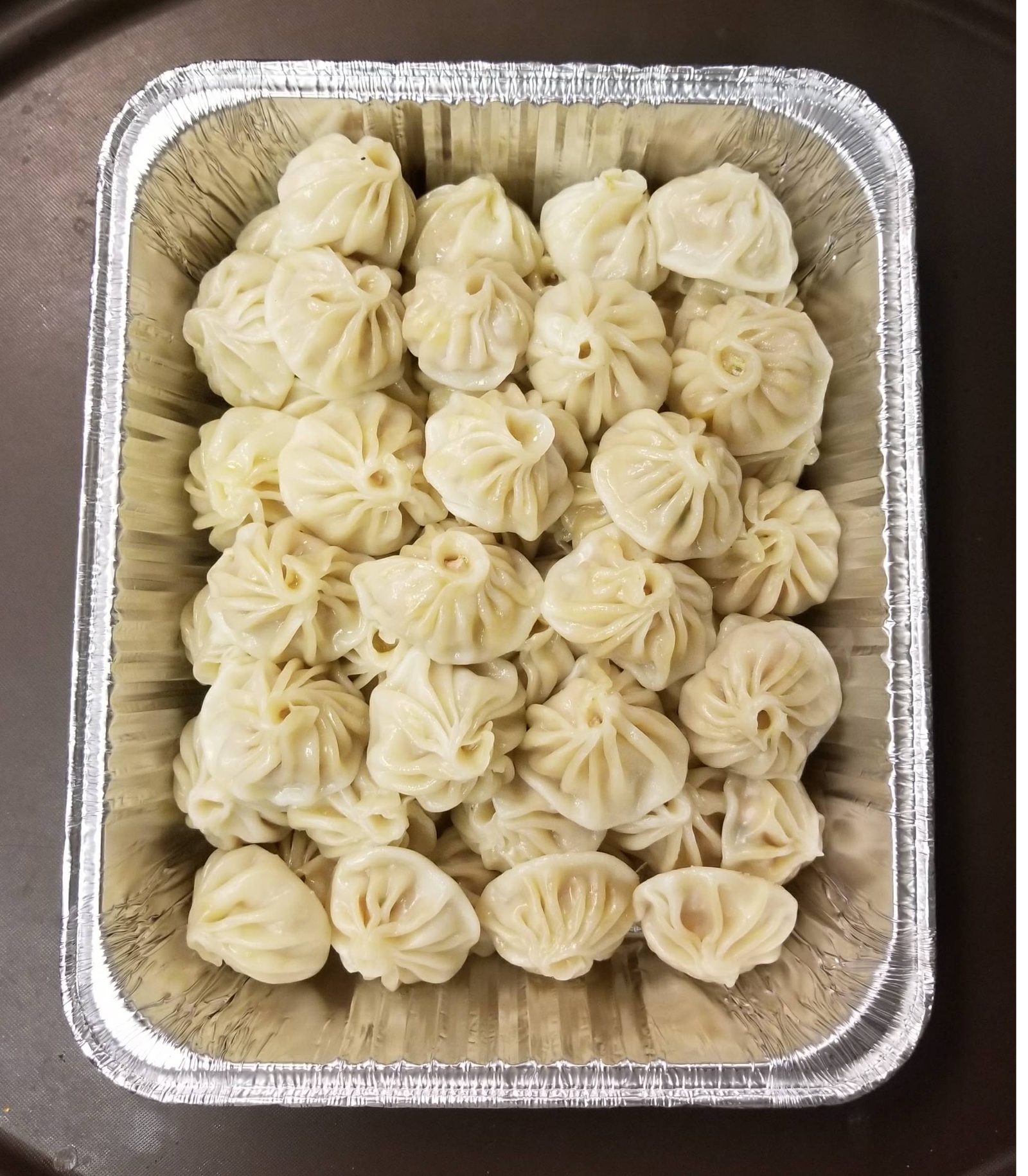
MOMO | MOMO CHA:
A word that brings forth a bout of hunger the moment it’s uttered. A simple word that makes the brain forget the giant meal it just devoured and triggers a surge of new hunger.
So addictive, letting go of this dish is simply unimaginable.
A pocket of nostalgia, with a side of bliss
From the outside, the unaware eater might compare momo to the Chinese jiaozi or the Japanese gyoza. It stands alone — some would say it trumps them — but there’s no doubt it is the staple taste of the Himalayas.
Why does this little dumpling turn heads and stir memories? One single bite transports anyone who grew up with it straight back: family and friends gathered around a large bounty of freshly steamed momo, maybe a few drinks, laughter — and then reaching for the next one before the memory even finishes.
Trying momo for the first time? Your memories start forming now. Congratulations — grab an order of freshly steamed momo, perhaps a beer or a cocktail, and prepare for a journey unlike any other.
Here to stay
Over the years, momo has become a staple wherever Himalayan people live, each region adding its own twist, as commonplace in households as daal, rice, and tarkari. A single bite unleashes an aroma and a heat of robust spices — and the sauce decides the mood: a spicy chili achar to stoke the fire, or a mellow sesame sauce to quell it.
Whether enjoyed at the foothills of a mountain or at the intersection of a bustling city, momo — in its simplicity and robustness — will always be enjoyed.
Ready for that first (or five-hundredth) bite? Steamed, fried, chili, or soup — Chicago · Niles, or read how we make it.